Sivasagar, formerly known as Rangpur, was the capital of the Ahom Kingdom from 1699 to 1788. It is a city in the Sivasagar District of Assam, about 360 kilometres northeast of Guwahati. It is the headquarter of the Sivsagsar District. This city is surrounded by the Dehing rain-forest.
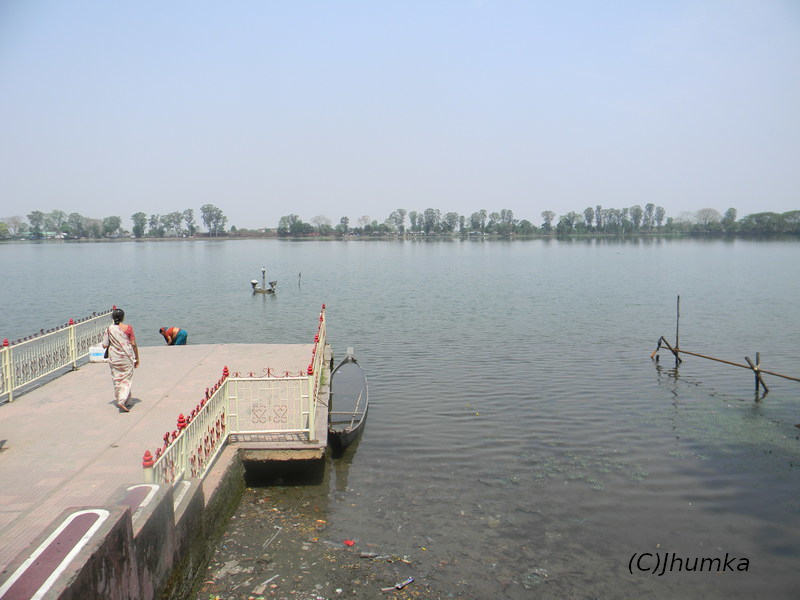
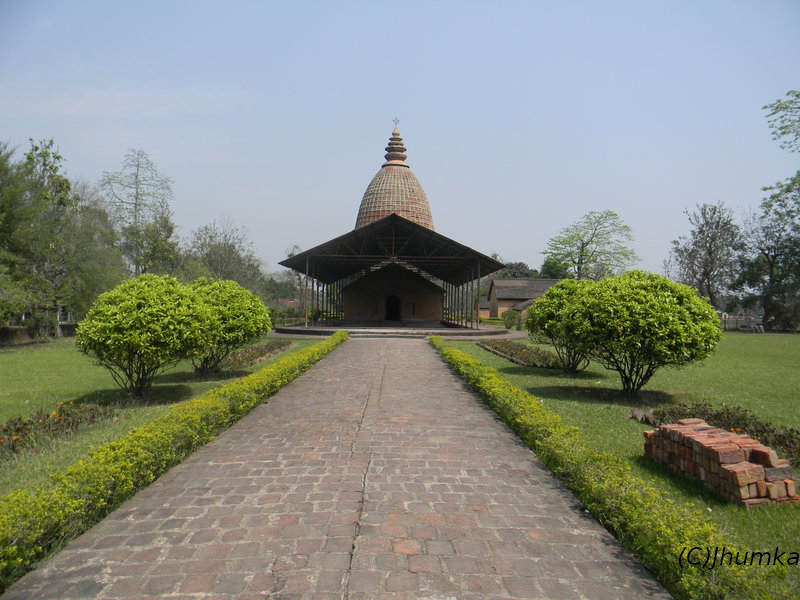
We went there from Jorhat by bus. There were several places of interest in Sivasagar. We went to see the paces hiring a car. First we went to Shibvdol, the temple of Lord Shiva. Within that temple premises there were few other temples. Behind the temple there was a large lake called Shivasagar.
Rang Ghar, built by Pramatta Singha in Ahom kingdom’s capital Rongpur, is one of the earliest pavilions of outdoor stadium in the Indian subcontinent.
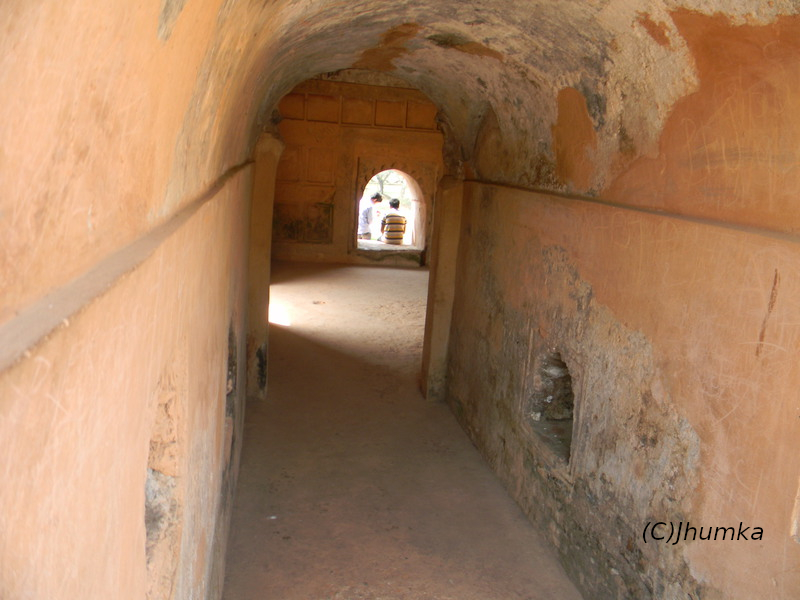
Talatal Ghar is a royal palace built by Rudra Sinha.
The kings dug sweet water lakes for the benefit of the subjects. One of them is Rudrasagar in the name of Rudra Singha. There is also a temple beside Rudrasagar called Devidol.
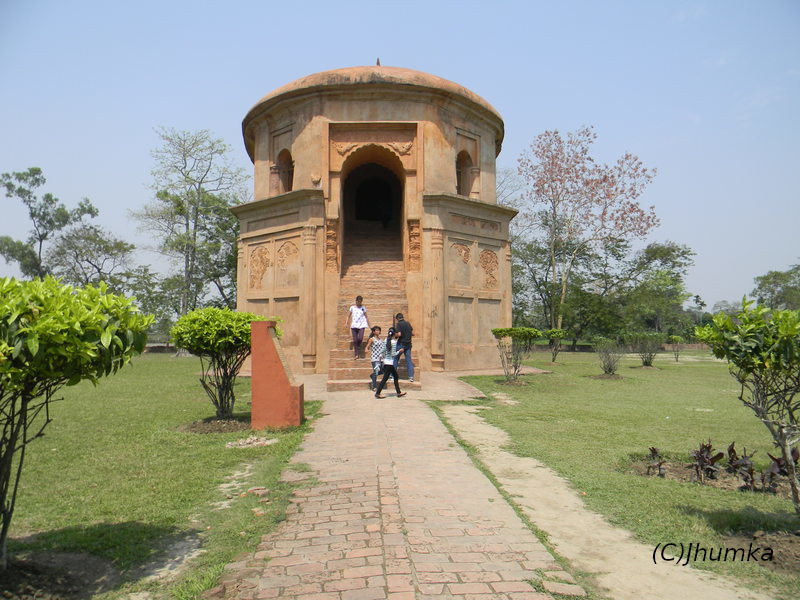
Kareng Ghar is a seven-storied royal palace built by Rajeswar Singha.
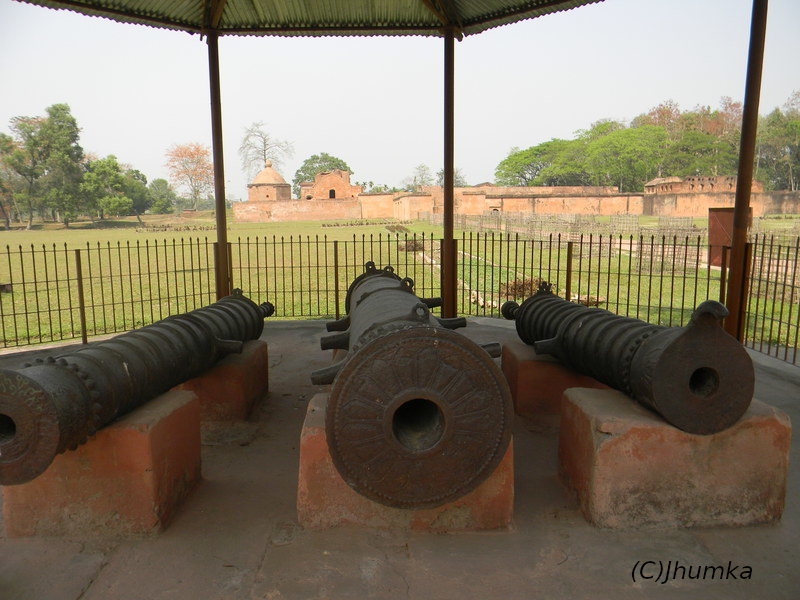
The kingdom became weaker with the rise of the Moamoria Rebellion, and subsequently fell by repeated Burmese invasion of Assam. With the defeat of the Burmese after the First Anglo Barmese war and the Treaty of Yandabo in 1826, control of the kingdom passed into East India Company’s hands.
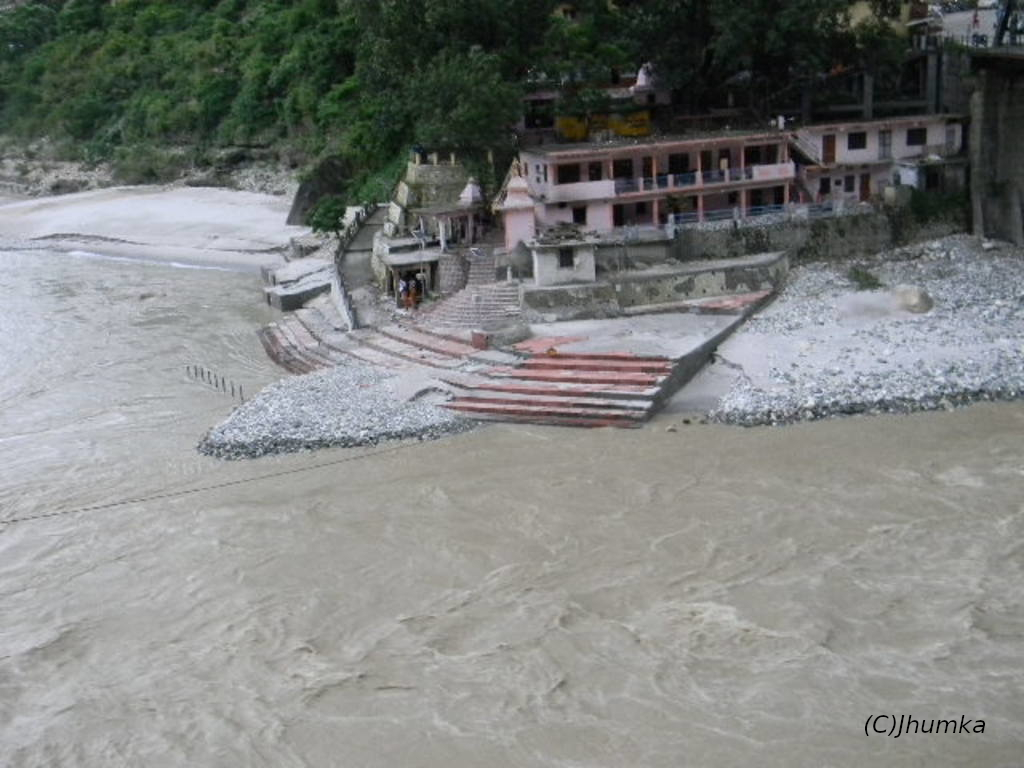
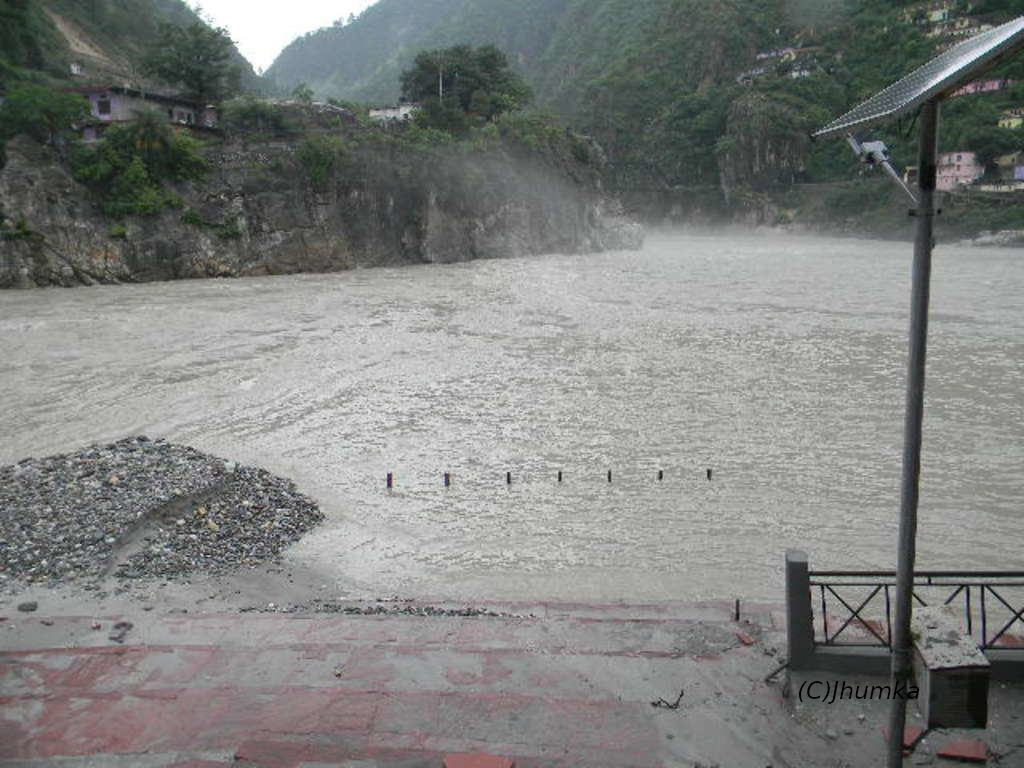
Karanprayag is a place on the confluence of Alakananda and Pindar rivers. It is on the way to Badrinath. Pindar river is also called Khuni ( Killer) Ganga because it flows with so much force all over the year and there are so many huge deadly stones in the stream that nobody remains alive if falls into it accidentally.
I was coming down from Joshimath in a shared jeep to Rudrapayag. I did get seat neither in the front nor in the middle row. The travel made me uncomfortable and dizzy for some reason. So when the jeep reached Karanprayag I decided not to proceed further on that day. There was a hotel in front of the jeep stand. I entered into that hotel and asked in the reception if there was any accommodation. I planned to stay there one day. The hotel’s position was good. At the rear side of the hotel there were large balconies on every floor from where the sangam ( confluence) of Alakanada and Pindar rivers could be seen.
Seat of Karan
I rested there after having lunch. In the afternoon I went out to buy some medicine. The owner of the hotel was sitting in the lobby. I asked him if it was going to rain and how distant the medicine shop was. It was very much cloudy and there had been frequent lightning. I could see that it was raining heavily in the distant hills. The owner assured me that it would not rain and I could go to see Ganga Aarti at sangam which was very near to the hotel. As soon as I reached sangam it started raining heavily. I took refuge at the lodging of the temple priest. There were two or three sadhus. I talked with them for a long time. When the rain stopped I went out to buy medicine. When I reached the hotel it was quite dark. I severely reproached the hotel owner for misleading me. He bore that with a patient smile.
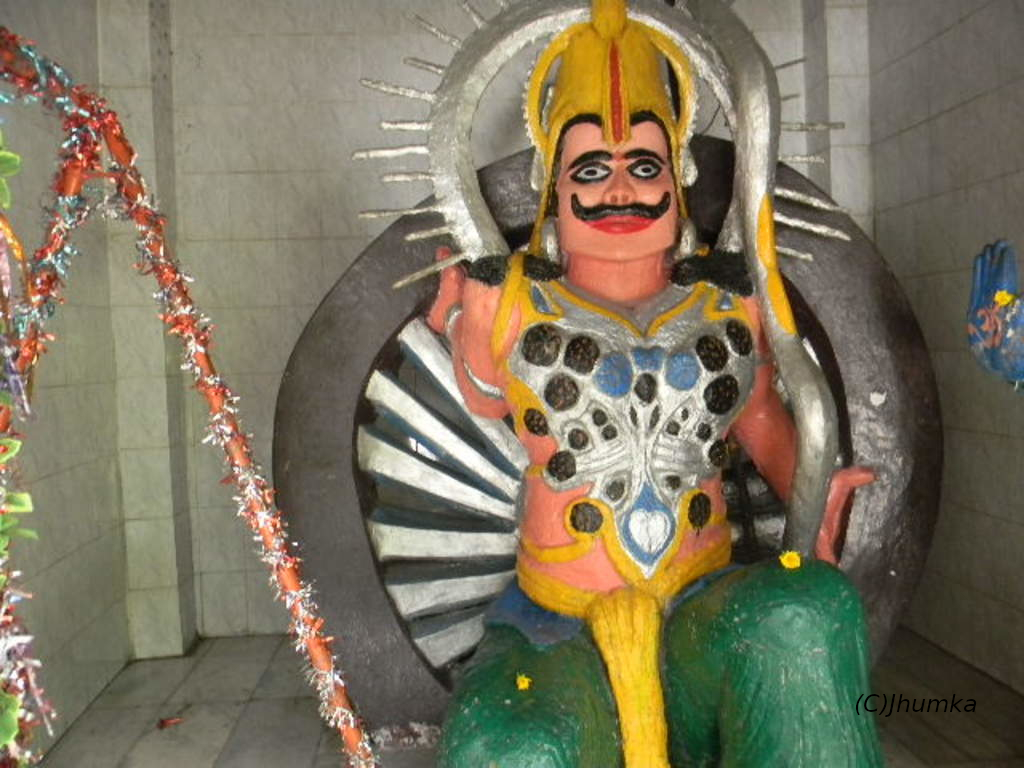
Mahaveer Karan
While having my dinner the manager expressed his regret that due to the spread of the news of natural calamity at Badrinath Highway the rush of tourist decreased in such a way that previous day there had been eight boarders, but that day I was the only boarder. I became a bit scared and expressed my feelings. The hotel was large and three storied. The manager gave me assurance that there was nothing to be afraid of being alone as they were there for security. I found the people of Himalayas always simple, honest and sincere.
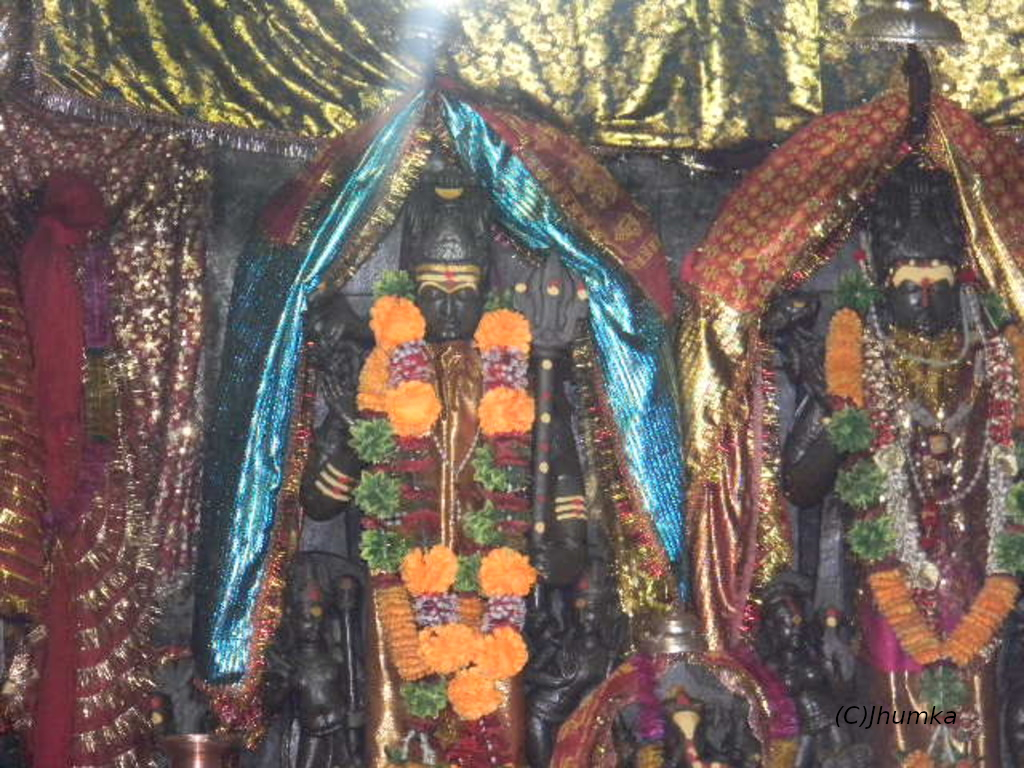
Uma devi or Parvati
Next early morning I went to the temple of Karan, the son of Queen Kunti as depicted in Mahabharata. There were many mythical stories about the place. There was a place called the seat of Karan beside the river Alaknanda where he worshiped the Sun god. There was another temple of Uma Devi or Parvati which was also an ancient temple. After coming back I had my breakfast and left the hotel. An employee of the hotel put my luggage in a shared jeep for Rudraprayag. When I was waiting in the jeep I saw a political banner of a party where I saw the photo of our hotel owner whom I had scolded severely the previous evening. I asked the driver and came to know he was the MLA of that place.
Barot is a place that apparently does not look glamorous like other hill stations. It is an off beat travel destination of Himachal Pradesh. Buses ply directly from Mandi to Barot. I reached Barot Valley in a Sunday afternoon of March 2019, when it was raining heavily. While we were proceeding towards Barot from Ghatasni our bus stopped frequently to be allowed to pass because there was quite a rush of private cars and the road was too narrow. I came to know from the girl, who was a local and happened to be my co-passenger, that Barot was becoming a popular weekend destination for the people of Chandigarh. There is a dam on Uhl river and the river is famous for trouts. There is also a government run trout farm.
As it was raining cats and dogs, I asked the girl if the hotels or home-stays were distant from the bus stand. She informed me that just beside their house there were two home-stays. She offered me to stay in their home also. I got down from the bus, they gave me lift in their car which came to receive them from the bus stand. Her brother was with her who was an army jawan posted at Kargil. I lodged in a home-stay beside their house. The room was clean with basic amenities like geyser and the rent was considerably cheap because it was neither season nor even weekend. Food was simple but tasty. I went to the girl’s house later. They were very friendly people. They were seven sisters and a brother. Their parents were not at home. They had an aged aunt and her deaf and dumb husband with them. I took a cup of tea in their house sitting beside the fire place.
Next morning was sunny, I took a stroll in the village after having breakfast. At the time of breakfast the lady of the home-stay requested me to take lunch outside. While walking along the village path I found her working in the field on the mountain quite away from the home stay. Then I realized why she had requested me to take lunch outside. Himalayan women are very hard working. They work inside and outside home.
Trout fishing farm
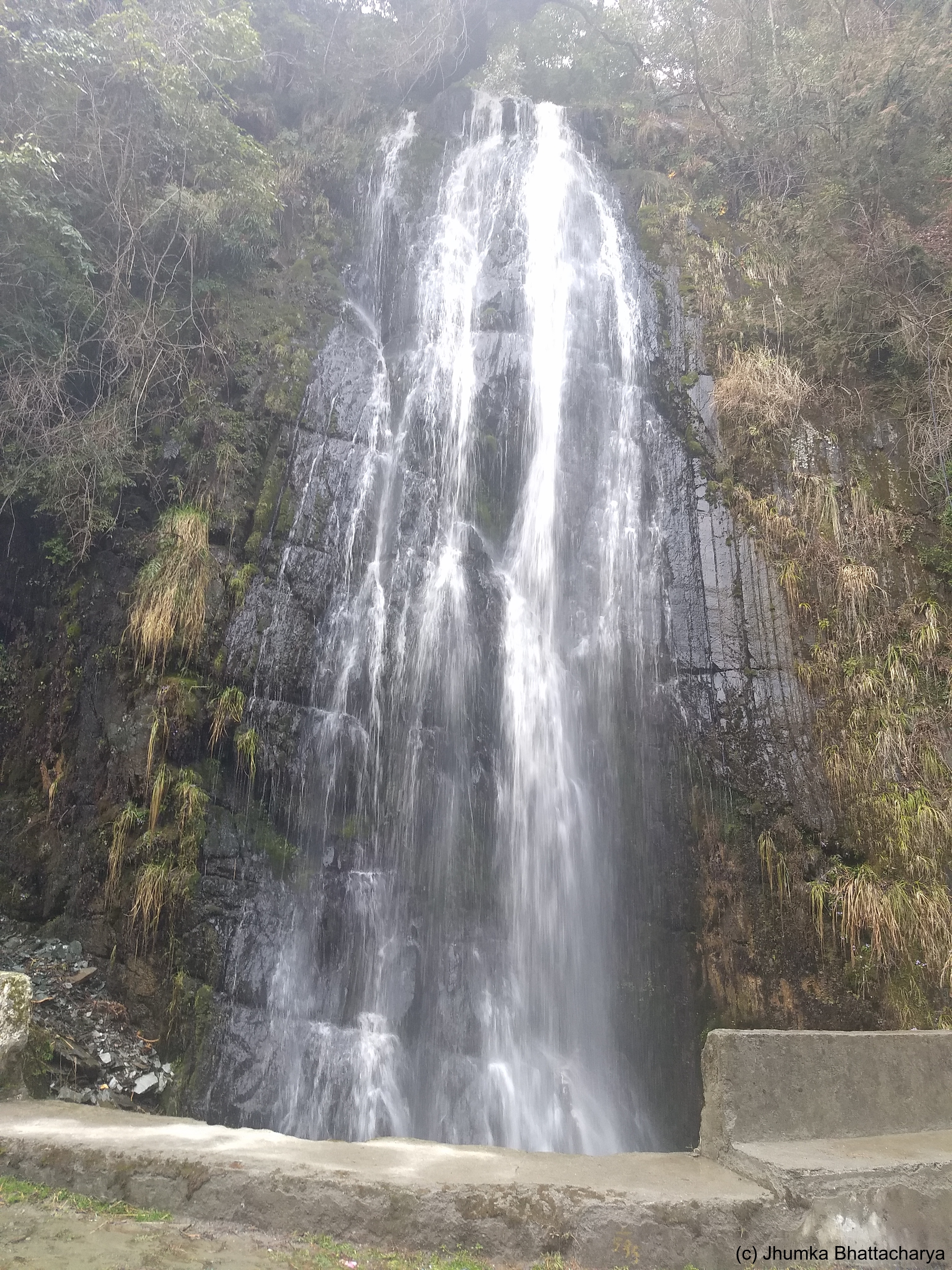
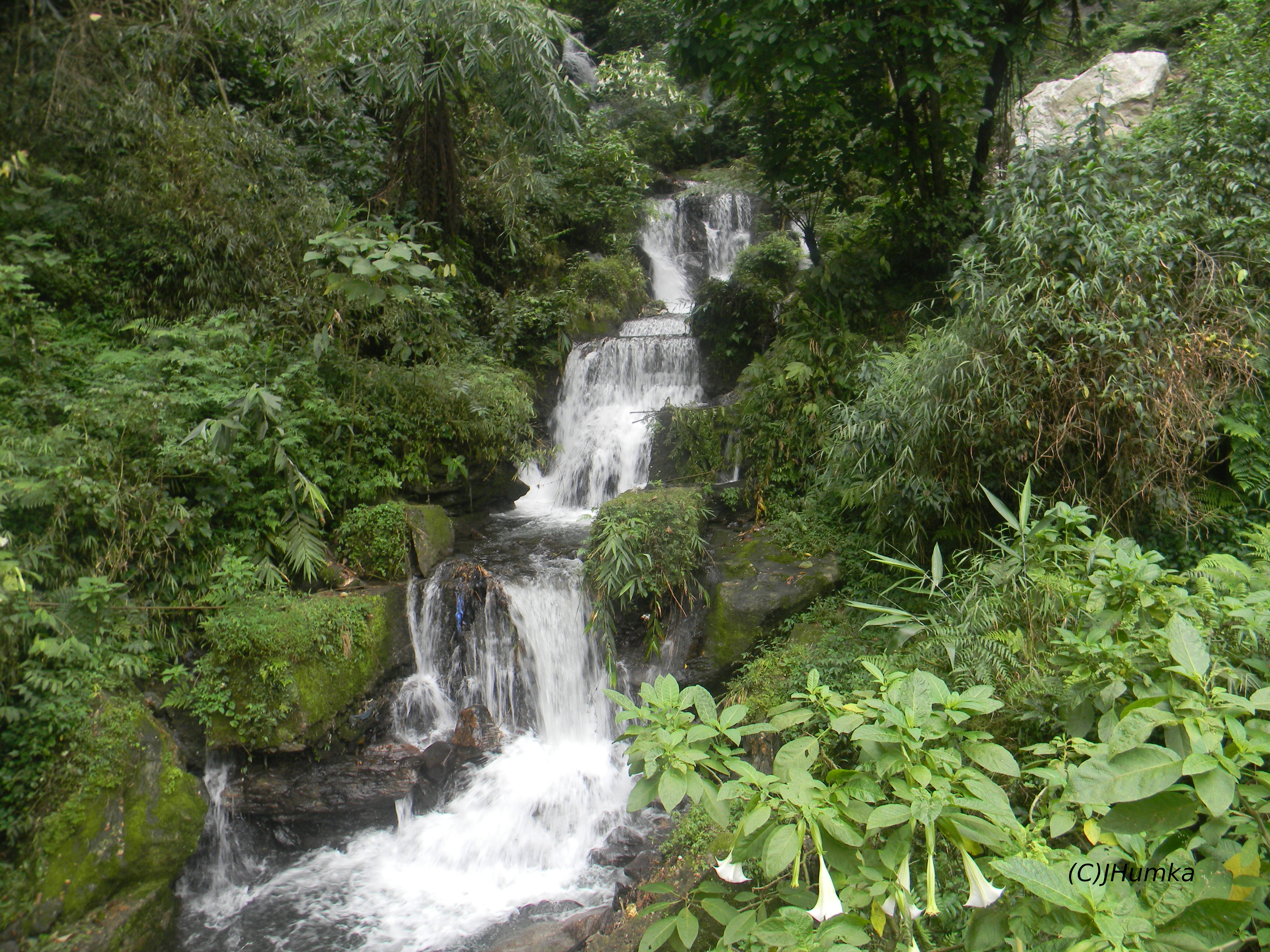
The village is small and spread on the both side of the river. In the morning I covered one side, visited trout fishing farm, went to the small market and had lunch there. In the afternoon I went to the other side crossing a wooden bridge made only for pedestrians. The natural beauty of the village uncovers itself if someone stays there and moves around in the nature. Its beauty is addictive. There was a small water falls in the village. A person gave me lift up to the falls in his car while taking back his children from the school. I came back in the evening crossing a bridge on the Uhl river at the extreme end of the village and had a tasty dinner of local saag and sabji with two rotis. The hostess was a good cook. Next morning I left the valley by taking another bus from the highway near the main market and the dam. The owner of the home stay carried my ruck sack and escorted me up to the bus stop.
Majuli is a large river island in Assam. The island is formed by the Brahmaputra river in the south and the Kherkutia Xuti, an anabranch of the Brahmaputra, joined by the Subansiri river in the north. It is accessible by ferries from the city of Jorhat. Majuli is currently listed as the world’s largest river island.
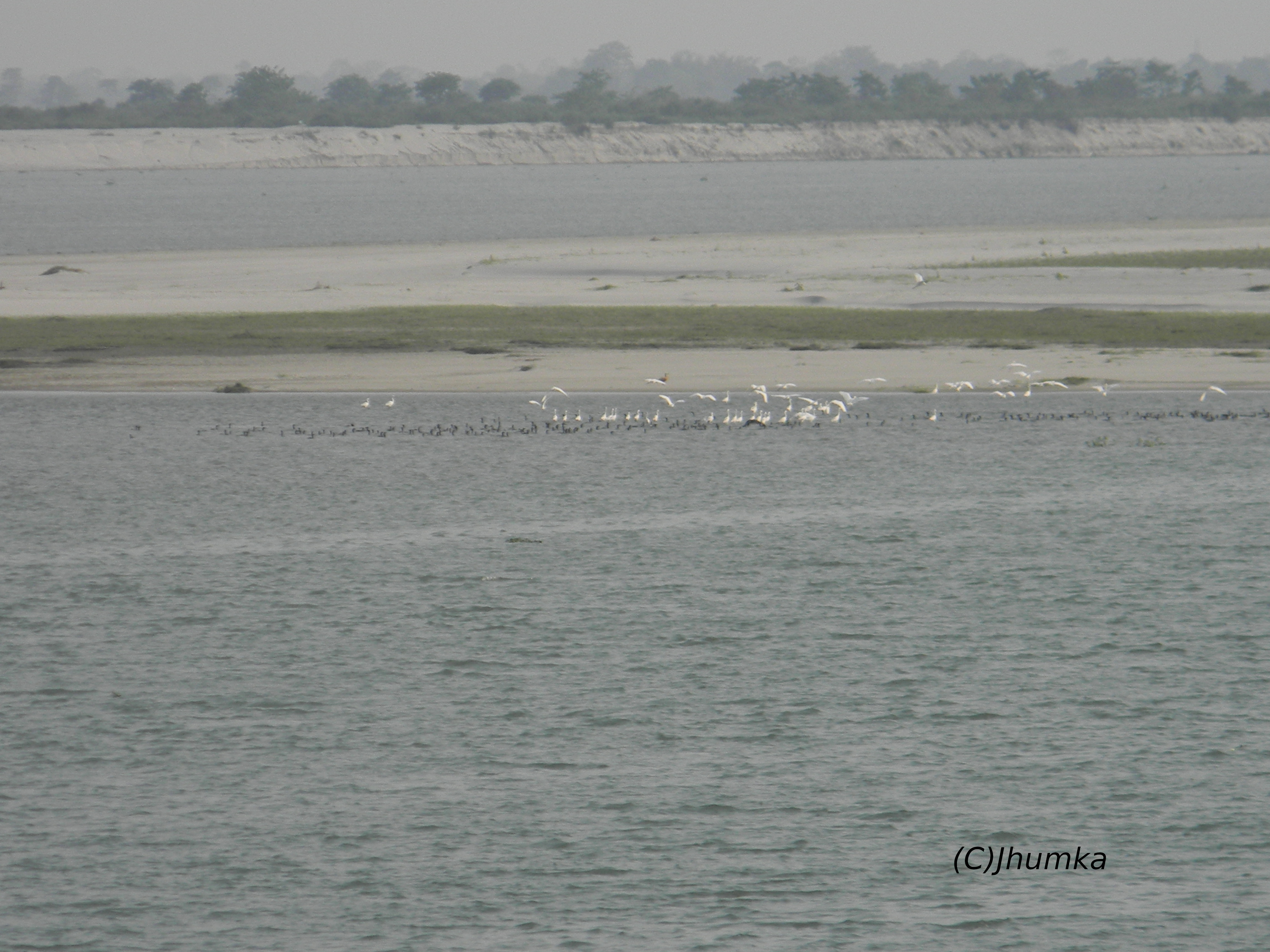
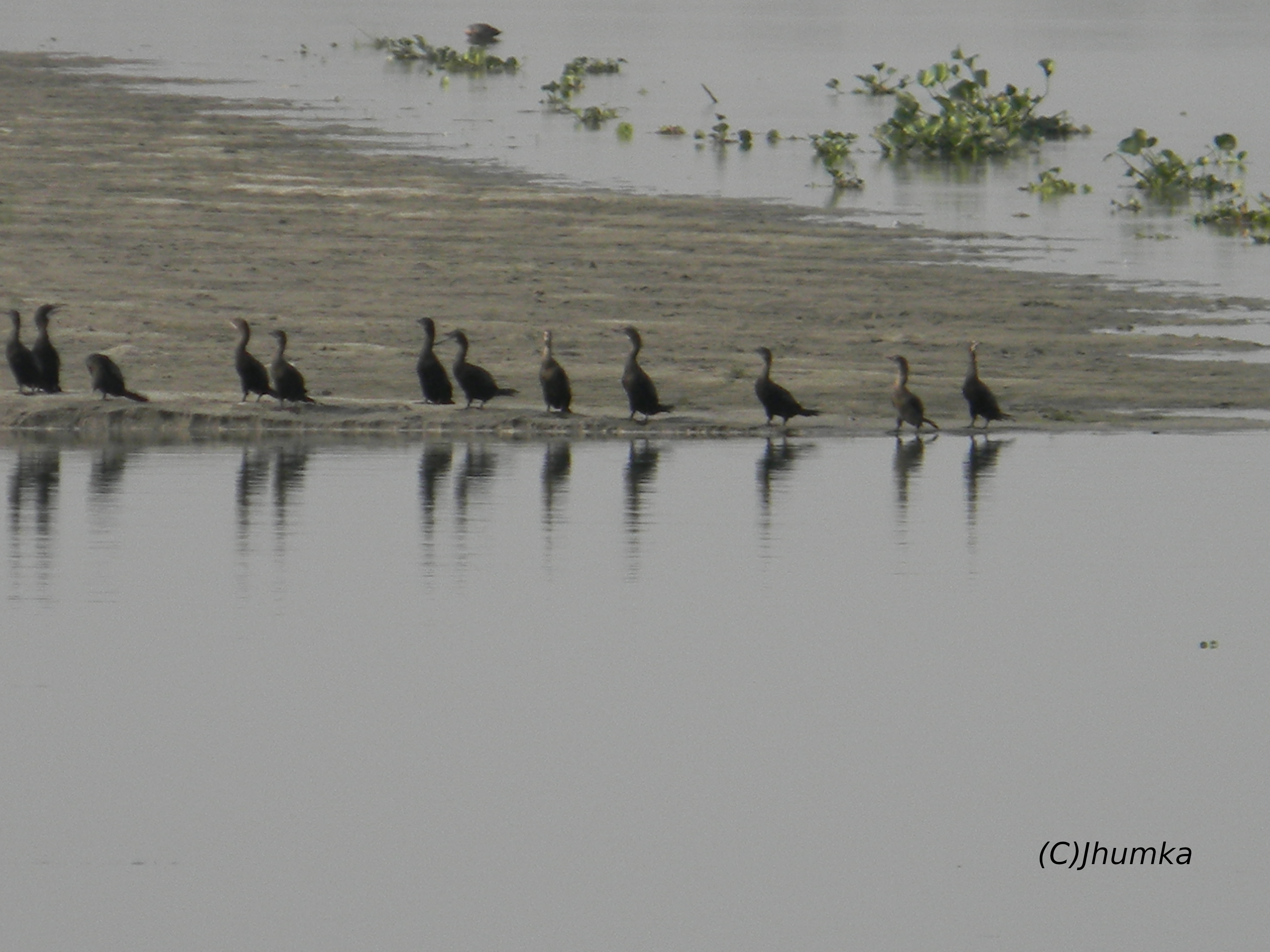
We started early in the morning from Jorhat to reach the jetty by auto rickshaw. The journey by steamer was beautiful with Brahmaputra river on both sides. There were small islands in the river due to sedimentation where one could see different types of birds. Mostly fishermen lived there. After 2 hours we reached Majuli. The land was full of white sand. There were several Vaishnava Satras or Monastaries in the island. We visited few of them like Aunati, Kamalabari ,Dakhinpath etc. Satras are famous for their different cultural activities.
Gayan Bayan at Uttar Kamalabari Satra
On the way we saw the indigenous hand looms of Assam and traditional tribal houses of the island made of canes and bamboos. The island is full of greenery.The main industry is agriculture, with paddy being the chief crop.
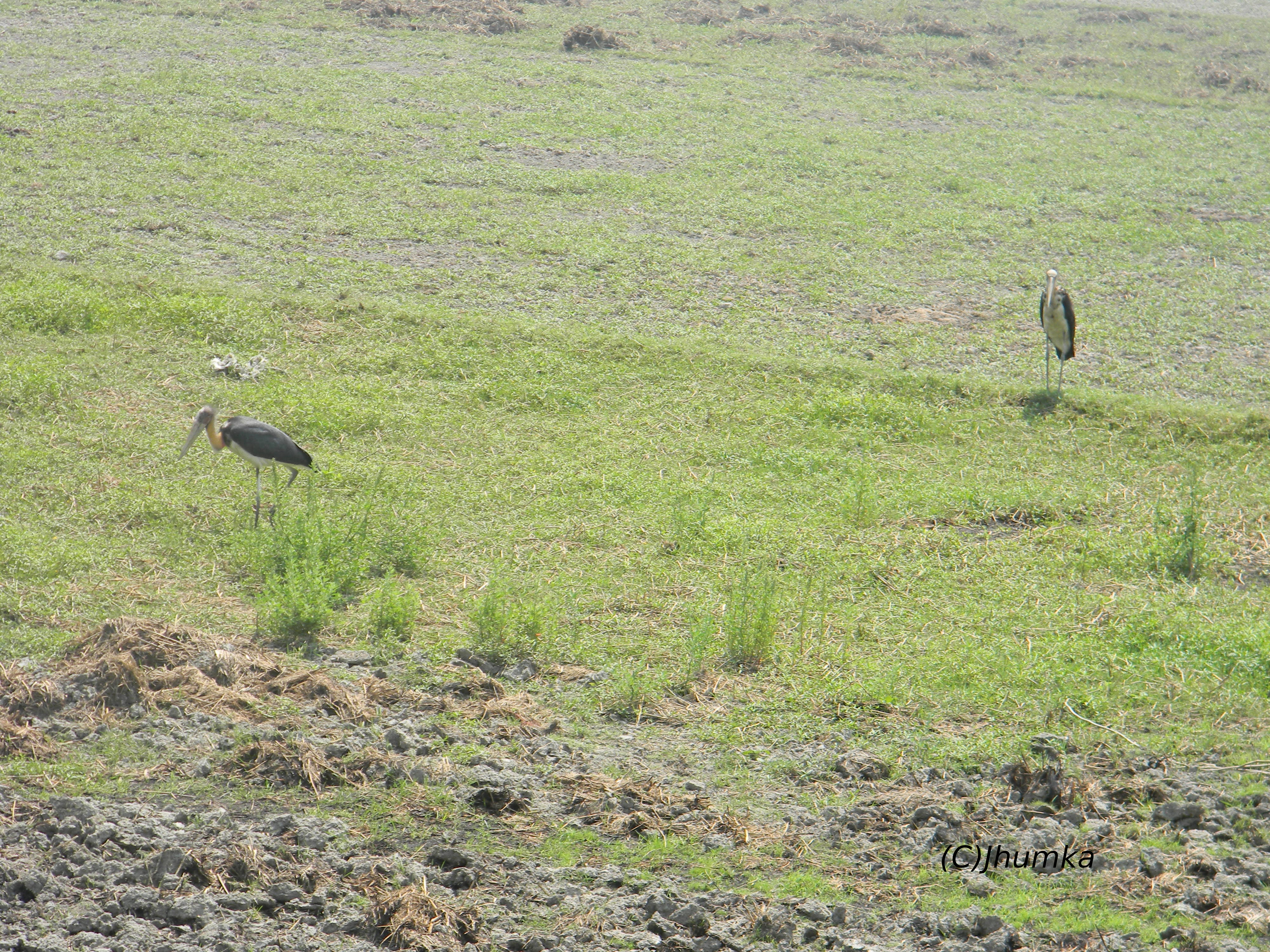
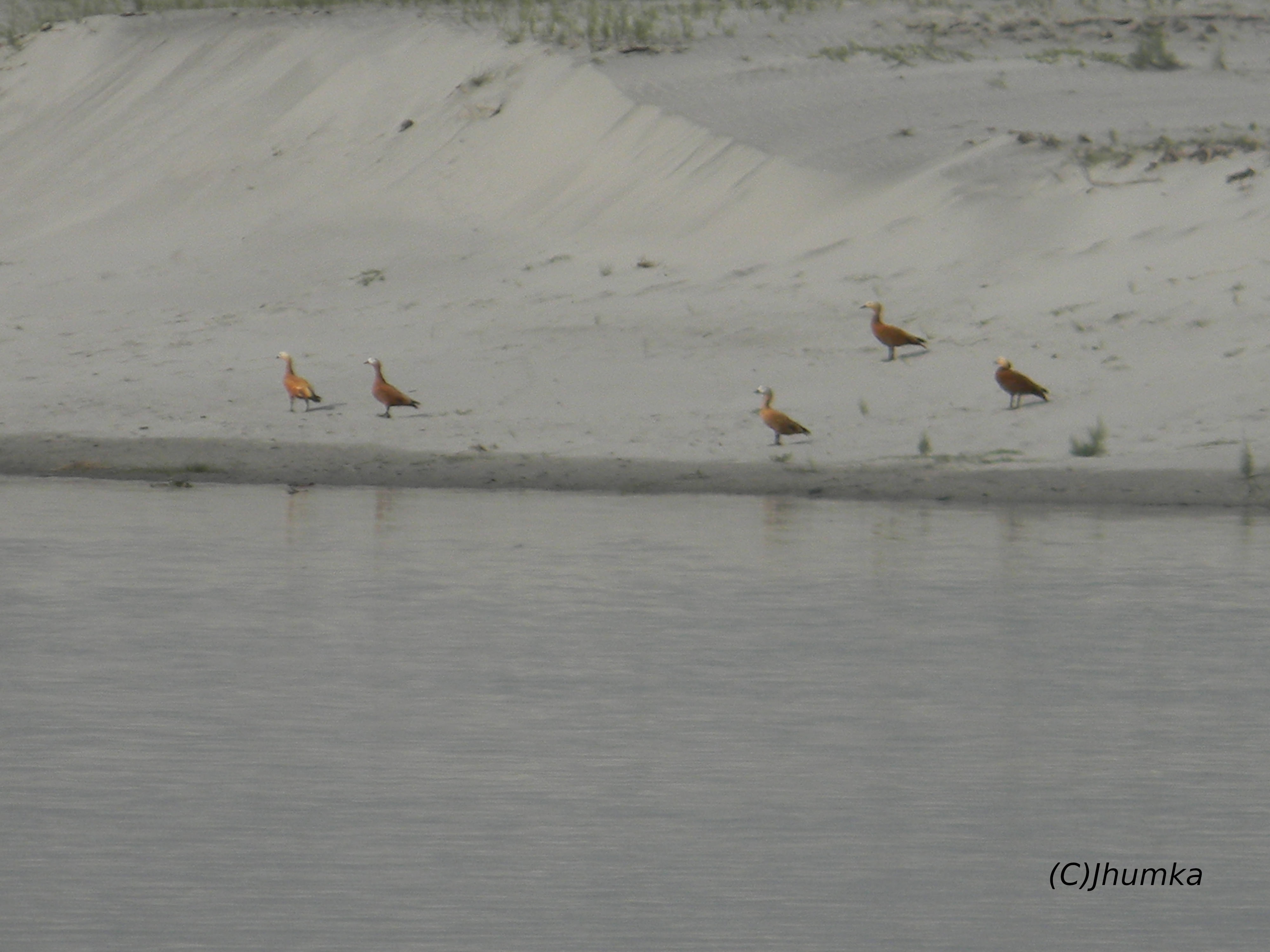
Majuli is famous for its migratory birds. Though I did not go there in the proper season still I saw lots of birds. The natural beauty of the island is unique. There are wet lands and ponds, with ducks and goose. The island is almost pollution free owing to the lack of polluting industries and factories.
Kalpeshwar is the 5th Kedar among the five Kedars. The temple of Kalpeshwar is situated near Urgam village from where Nandadevi peak can be seen. It is at an elevation of 7,250 ft (approximately). There is a very small temple. previously one has to walk 10/12 km from Helang, which is few kilometers away from Joshimath. The beauty of Devgram and Urgam village is still pristine as Kalpeshwar is not as popular as Kedarnath. I visited Kalpeshwar and Tunganath in the year 2018 April. Now a days one can reach directly by car up to the temple of Kalpeshwar, but I had to walk 2/3 km from Urgam Village.
Kumbh Express was 15 hours late. I reached Haridwar at 7-30 in the morning instead of 4-30 PM in the previous afternoon. I had booking at Rahi Motel for one night stay. I did not feel to waste another day staying there. I went to the bus stand directly from the station. The last bus of the day for Joshimath was standing there. The driver was calling out for passengers. I boarded the bus. In the evening when I reached Helang, which was 20 kilometer away from Joshimath, it was 5 oclock in the evening. The sun light at Helang was fading out. I took shelter in a hotel where the road bifurcated for Devgram.
The hotel owner informed that the shared jeeps would come from Joshimath at around 7-30 in the morning. It was 3rd week of April. Chardham Yatra season did not start yet. So there was no rush of pilgrims, except locals. Kalpeshwar is not a very popular pilgrimage like Kedarnath or Badrinath. I took my breakfast early and got ready before 7-30. I kept on waiting. I met a Swiss traveler who came back from Kalpeshwar staying 2/3 days there. He could speak very good Garhwali and Hindi. He informed that Uttarakhand was his favorite holiday destination. I talked to him for sometime. He was going to Anusuya Devi temple from there.
Kalpa Ganga
Devgram is 12 kilometers from Helang. Previously People would trek from Helang. After a long waiting till 12 noon the jeep came. It was full with passengers. I somehow forcefully managed some space for myself, there was no other option. I reached Devgram at 1 PM, Kalpeshwar was 3 kilometer walking from Devgram. I stared walking with a local woman. She lived in Devgram. She informed that she had three sons and two daughters. Sons and daughters were all married. She went to Joshimath to meet her daughters. Their husbands were Jeep drivers. She had some land in Devgram where she grew crops with the help of her daughter in laws. Her sons grazed cattle.
Devgram
When I reached Kalpeshwar temple the bridge on Kalpganga had been broken due to natural calamity, instead repairing it, a motorable road and bridge construction was going on. I visited the temple going downward crossing a temporary wooden bridge. I came back in haste with the fear of missing the last shared jeep to reach to my next destination.
Kerala is a very beautiful and tourist friendly state. As soon as the train enters into the state one can find the difference in the nature with green all around and lots of coconut trees. We reached Periyar from Munnar. The road was beautiful with tea gardens on both side and the orange trees with ripe saffron colored oranges among the different shades of green enhanced the beauty. Though I was not well due to my upset stomach still I enjoyed that pleasant scenery. Periyar is famous for it’s reserve forest, lake and spice market.
We went to the lake early in the morning. My son went for bamboo rafting in the forest of Periyar for the whole day. I took a ticket from the counter of the forest department for a boat ride in the lake. It was a pleasant trip. There was a group of local pilgrims, who came back from Guruvayoor temple. They were eating something from cans which looked like jaggery. I became curious and asked them what it was. They told it was the prasadam of the temple of Guruvayoor and shared a part with me. The boat was large. It gave a round through the whole lake. I found some beautiful birds and animals. The weather in the morning was pleasant due to the presence of dense woods.
After the boat ride I went to the market and had lunch. There was a strong smell of spices everywhere. I surveyed the market and bought some cardamom, clove, and black pepper. Though the town was small there were many jewellery shops. People of Kerala are very much fond of gold, and people wear gold without any fear of snatchers. I watched most of the women were wearing more than one gold chains. Kerala is a comparatively peaceful state in India with less crime and hundred percent literacy rate. I found lots of foreigners there. It is famous for its health spas which provide herbal treatments. One can see coffee trees in every lane.
Dzongu is a valley in North Sikkim. This is a protected area for Lapcha tribe, who are the original inhabitants of Sikkim. I had no previous plan for going there. I suddenly decided to plan a short trip during 2018 Durga puja vacation. During Durga puja millions of Bengalis go out for their yearly trips. Sikkim being one of the nearest and cheapest destinations, the rush is maximum there during this period. So I thought to choose a place that is a bit different and not so popular among common people. After taking opinions of few of my travel freak friends I got an idea how to reach there.
I reached New Jalpaiguri by Tista-Tosha express at 3 Am. I waited 2 hours in the waiting room of the station. At 5 o’clock in the early morning when auto rickshaw service started I went to Shiliguri bus stand by an auto rickshaw. I boarded a bus which was going to Gangtok. I told the conductor that I wanted to get down at Singtam, a small transit town. The driver stopped the bus in front of a small bridge on the highway and informed that I have to enter into the town to get a shared jeep for Mangan. When I reached Mangan Taxi stand it was 1 PM, I found a shared jeep for Dzongu but there was no certainty when would it reach there. So I hired a taxi for myself on condition that the driver would help me to get permit from the police station as the DC office was closed during Durga Puja.
There were few villages in the Dzongu valley. I had no idea which village was suitable for stay. The driver arranged a home stay at Passindang village for me. At night I had a nice authentic Lapcha dinner with 2 types of ferns cooked in two different methods, daal, and fried beef with 2 rotis. They were very tasty, I was hungry too, I enjoyed the meal very much. I slept quickly as soon as I went to bed with the symphony of cricket and the sound of the stream that flowed nearby. In the mid night when I woke up I heard that the chirping of cricket had stopped, instead there was sound of rain drops.
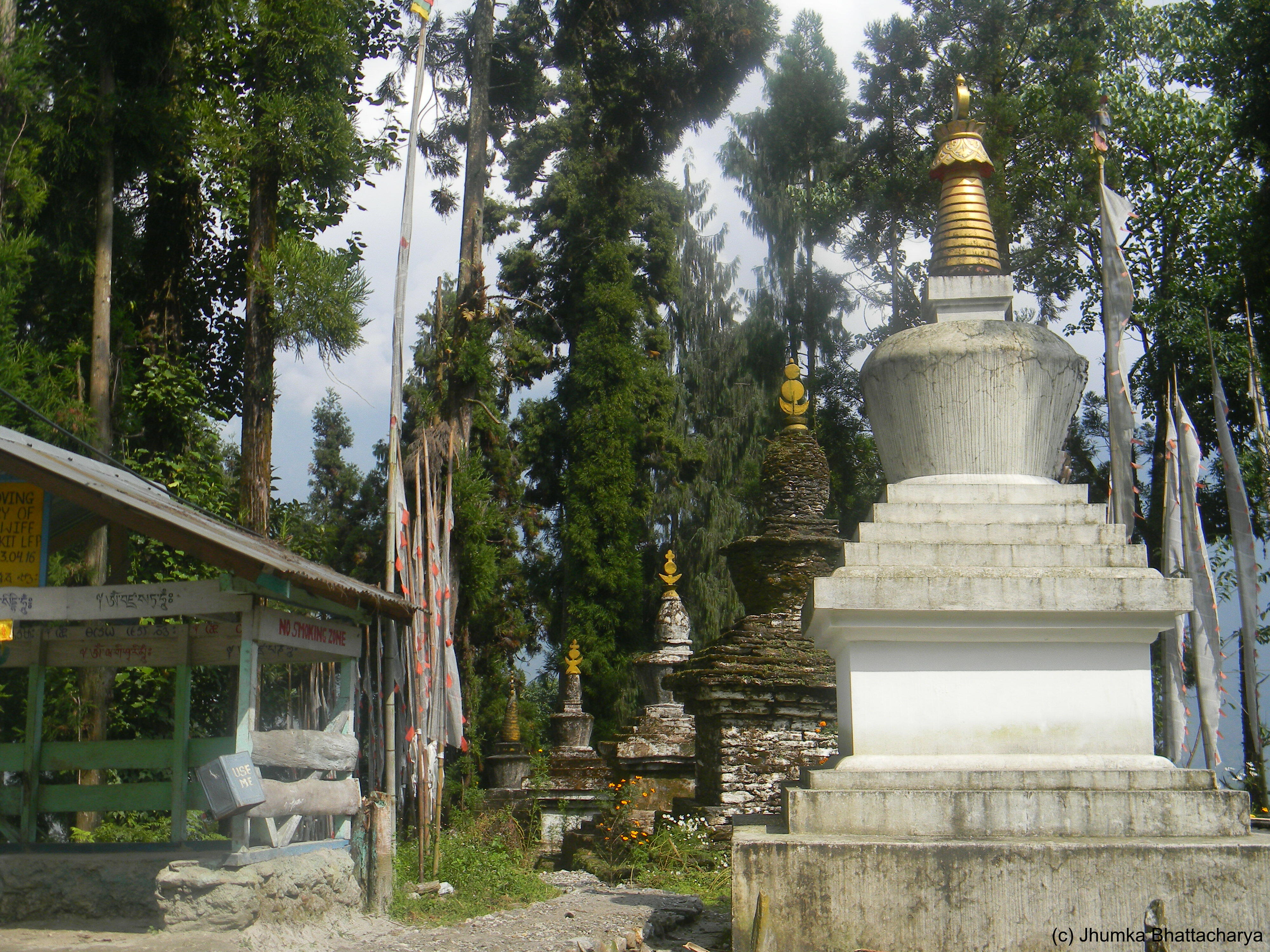
In the morning Dzongu looked mystic with clouds everywhere. After breakfast I went to Lingthem monastery by the car of my home stay owner. They had black cardamom plantation field there. The monastery was small. There were few stupas. It was a long way which I had to come down by myself. Though it was quite tiring I enjoyed the picturesque and tranquil views of the villages of green Dzongu valley, river Tista, beautiful birds, butterflies, unknown wild flowers, quash hanging here and there in plenty.
N.B. I stayed in Pasingdang village where there was only one home stay at that time. The village is good but the village Lingthem is in a more strategic position from where the Kanchenjunga view point is very near. Normally tourists stay there. It is almost at the center of the Valley. It is situated between Lingthem Monastery and Pasingdang village. There are three/four home stays in the Village Lingthem and Tingvong. If someone books accommodation, they take required documents and make permit as well as pick up from Mangan and again drop to Mangan.
Tosh is a small village in the interior of Parvati Valley in Himachal Pradesh. It was snowing, more like sleet actually, when I reached Tosh from Kasol taking a shared jeep from Manikaran. I got down from the taxi and tried to open my umbrella in a hurry as I was preventing myself from icy cold rain and in this process a spike of the umbrella broke. I put the rucksack on my back and walked forward in search of a shelter. The taxi stand is in front of a bridge on a small stream which is the gateway of Tosh.
I entered carefully because of ice and slush. Just after crossing the bridge I found a hotel. I inquired whether accommodation was available. They informed that they didn’t have attached bathroom. The next hotel on the way was closed. Proceeding forward I found a hotel upward where there were guests taking selfies on the balcony. There was ice and the path was very slippery. I could not reach there. I shouted for help. A person came and helped me to reach the hotel. He was the manager of the hotel.
It was very cold and I was shivering, so the manager told me to sit by the fireplace in their dining hall, and take a cup of tea and then to see the hotel room and complete all other formalities. It was a nice cozy room. I sat there snugly beside the fireplace. There were few people around the fire. Some were guests, some were employees who from time to time came to get the warmth. I saw my room. It was work-ably good. I kept my luggage there, closed the room and sat again beside the fire. There was no electricity.
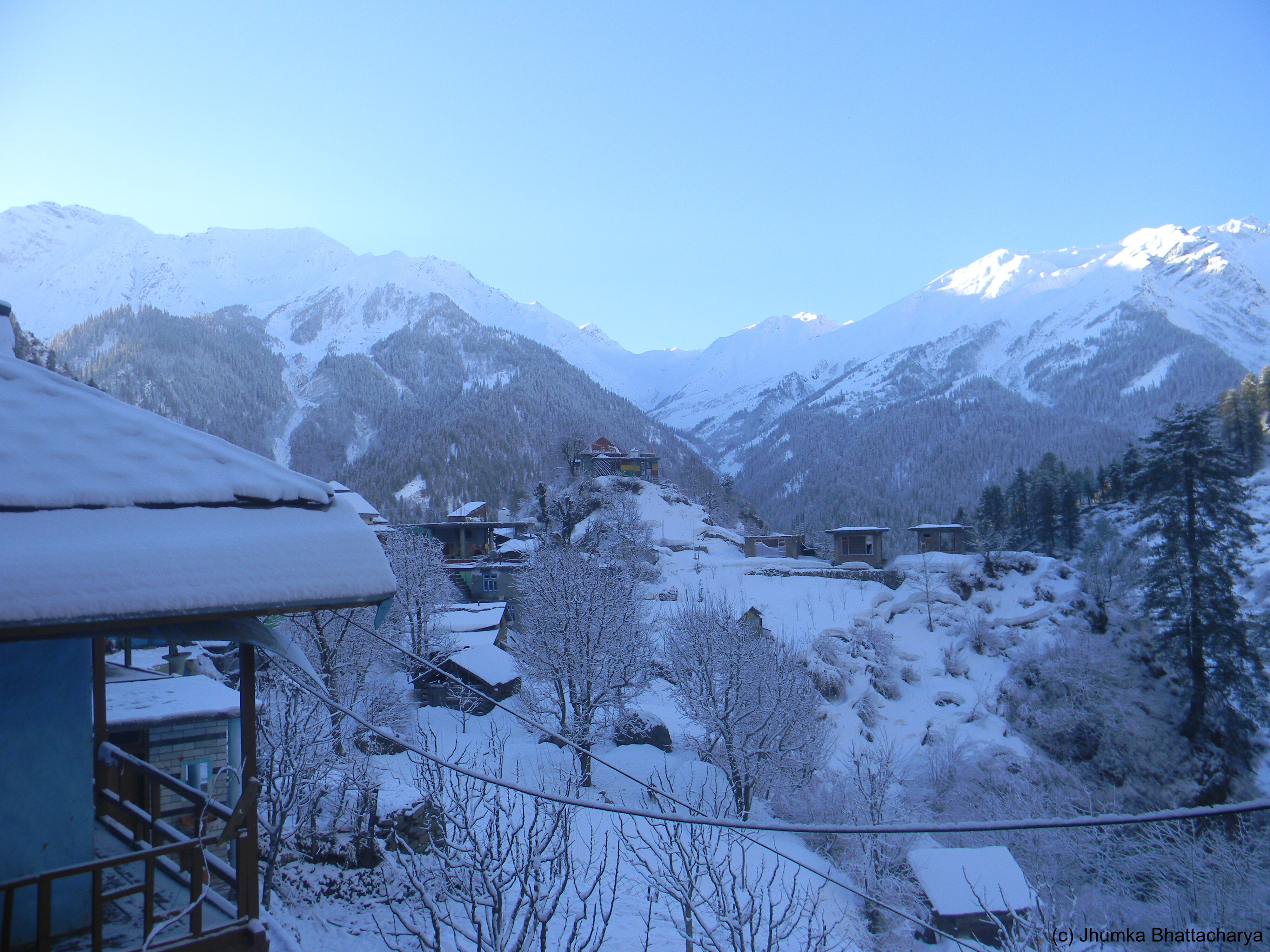
It rained whole day. People kept on coming and going to have shelter or lunch. Food was tasty, and Israeli cuisine was also available there. I had lunch, afternoon coffee and a tasty early dinner sitting all day there. In the evening it started snowing heavily. Electricity came back luckily. There was nothing much to do. Time to time I went to the top floor to get mobile network and to contact my son and watched the beauty of the snow covered village.
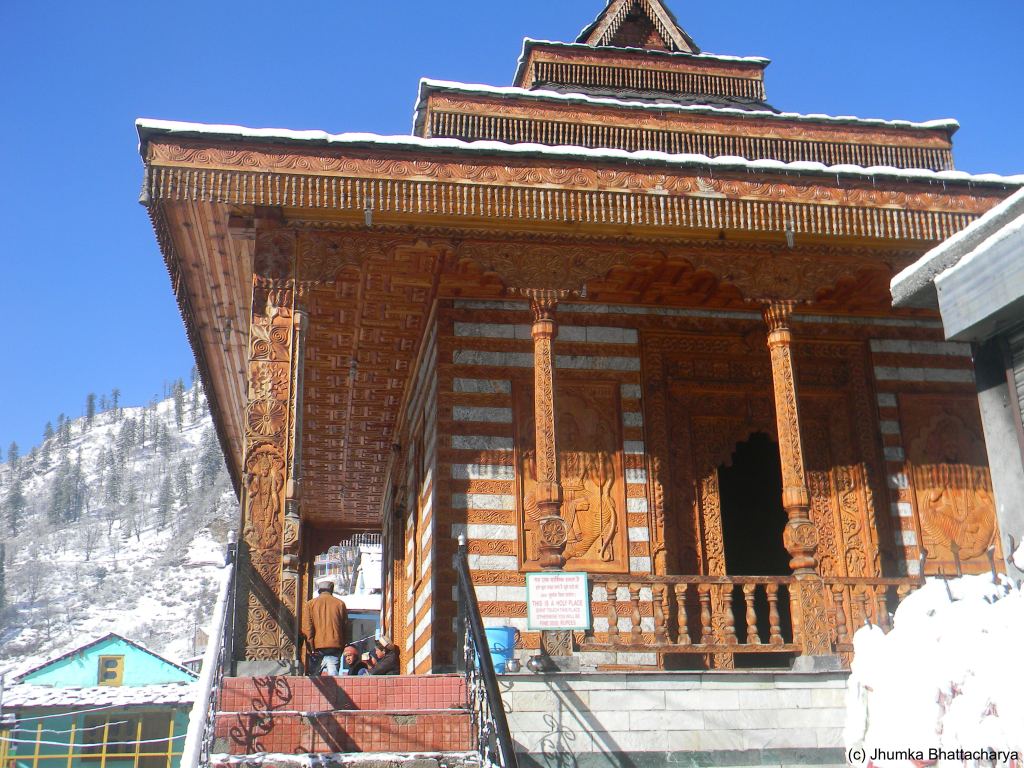
Temple of Jamdagni
In the early morning when I woke up it seemed that the whole valley was shrouded with a thick white sheet of ice. I went out from the room to take a stroll in the village. I tried to roam around. I broke my folding stick in this effort. There was a temple of Jamdagni ( the great sage and father of the warrior monk Parshuram) in the center of the village, I went there, but outsiders are not allowed to enter. With the rise of the temperature the snow on the roofs started melting and fell with thuds. I came back to my hotel with difficulty. After breakfast I left Tosh at 10-30 AM.
I had a strong desire to visit Mayavati ashram since a long time. My father visited the place twice and had unique experiences. I missed the chance to accompany him because of my personal problems. My family is influenced by the ideals of Lord Ramakrishna and were initiated into R K Mission. I am also not an exception. As soon as I planned to visit Kumayun I included Mayavati in my itinerary. To go and stay at Mayavati one needs to get permission from Advaita Ashrama ( Entally, Kolkata ) which is a wing of R K Mission.
I went to kolkata branch of Advaita Ashrama. Initially Maharaj, who is the assigned in charge of booking, was hesitant to give permission to a solo female traveler for stay and tried to dissuade me. After a long argument when the in charge was convinced that I am quite determined to visit the place he informed me about the procedure to book accommodation.
When I got down from Lalkuan express I came to know that the best way to go there is through Berily( UP ), but it was too late to mend. I felt puzzled for some time. Few locals rescued me by giving information. At last I reached Mayavati on time via Tanakpur and Lohaghat.
It had been a unique experience staying there. It was pretty cold in March after a thundershower. Within 3 kilometer periphery of Mayavati there is no village, only forest, leopards are often seen there. We were instructed not to walk alone. The guest house is half a kilometer walk from the ashram. One has to walk 4 kilometers daily up and down to have breakfast, lunch, afternoon tea and dinner. The ashram is self sufficient, they produce food crops, vegetables and there is also a dairy farm. They run a charitable hospital where local people come for free treatment. Normally guests are not allowed to stay there more than 3 nights but doctors are allowed to stay more on condition that they have to give voluntary service in the hospital.
It was 12 o’clock at noon when I reached Tanakpur. Tanakpur is a small transit town in the foot hill of Kumayun Himalayas. I went there for going to Mayavati Ashram. I had booking for a night stay at KMVN tourist rest house. As I lodged there and asked for afternoon meal, they said it was not possible for them to provide food without previous notice. They informed that the market area was not far away from the place and it would cost 20 rupees by tuktuk to go there where I could get lunch . So I hired a tuktuk, and reached the market area where there were few places for lunch. After having lunch I started inquiring about the places of importance there.
Mata Punyagiri
I heard that there is a famous temple called Punyagiri or Purnagiri. I wished to visit there and got a shared jeep for that purpose. After a long wait it filled up and started. When it reached in front of the temple gate the sky was covered with thick cloud. The taxi driver told me that he would go back as soon as he got required number of passengers, and there was no hope for next taxi. I came to know that Holi was celebrated there with great grandeur and a fair was organized during that time. The preparation was full on for the festival. I started walking, after few minutes I realized if I went to the top of the hill where the temple was, it would take at least 3 hours to come back. It was almost 3 km uphill trek. I decided to return because if I could not come back in time I would be in great trouble. As I turned I found the taxi driver standing there, I told him why I planned to return. He was very enthusiastic and devoted, he said he would accompany me, so that I would not miss the taxi, he forced me to visit the temple. It was a tedious walk for me, I felt tired, but he was persistent.
The driver
When I reached the last phase it started raining, but that part of the stairs was covered with tin shade. I reached the temple. I feel blessed, it was a beautiful sight of the Kaligandaki river that I witnessed from the temple. When I came down it was raining cats and dogs. The driver started his jeep. Lots of people were waiting under different shelters. As soon as he started they rushed into the jeep.
N.B. From Lalkuan I took auto-rickshaw to reach Kichchha. From Kichchha bus stand I took a local bus by which I went to Khatima. From Khatima I got a shared taxi which dropped me in front of the KMVN guest house at Tanakpur. Buses ply in regular intervals from Berily to Tanakpur.


























 Benediction